
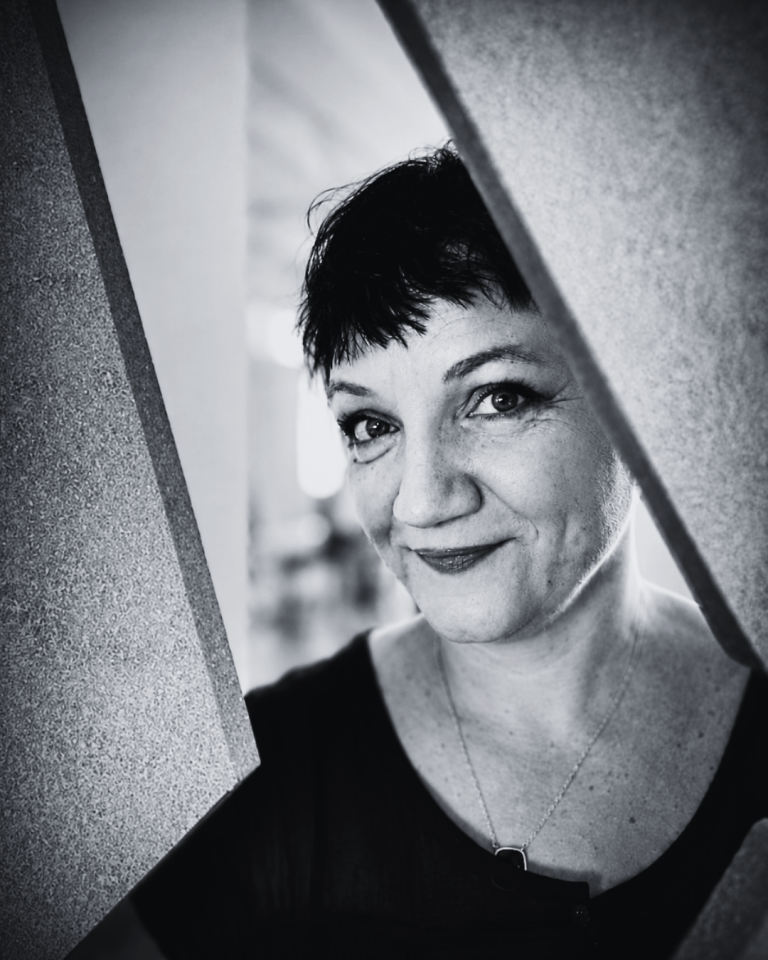
Director
Jonna Wikström
Request an interview via FNOB communications
INTRODUCTION
Jonna Wikström has been captivated by opera for longer than she may have realised. At around the age of nine, she saw Mozart’s The Magic Flute at the Savonlinna Opera Festival. Back at the family’s summer cottage, a group of children decided to create an opera of their own, with Wikström naturally taking on the role of the Queen of the Night – coloratura flourishes and all. At the time, she could hardly have imagined that more than forty years later, she would be directing opera at the Finnish National Opera.
Wikström is a theatre director, performance artist and writer who has found herself increasingly drawn to musical theatre and opera in recent years. She is studying International Dramaturgy at the University of Amsterdam and works as a director of opera for young audiences at the Finnish National Opera. Music is also part of her life outside work: she plays the violin in an amateur orchestra and sings in a choir.
What fascinates Wikström about opera is the combination of immense scale and intimacy. An orchestra, chorus, soloists and an entire visual world can come together on stage, yet at the centre of it all there can still be a single person, a single emotion or a small gesture. For her, music is the starting point of opera: its rhythm, tensions and breathing should also guide the choices made on stage.
Wikström likes to think of opera as a kind of machine, made up of singers, orchestra, conductor, stage and potentially even the audience. She is interested in what happens when these elements begin to visibly affect one another and their traditional roles are reconsidered.
This approach is closely connected to her extensive experience in community-based, participatory and documentary theatre. Wikström has worked with children and young people, senior citizens, immigrants, asylum seekers, formerly homeless people and people with intellectual disabilities. She is interested in people’s own memories and experiences as a starting point for art: the artist’s task is not always to invent everything, but to listen, observe and give form to what is already there.
Wikström wants to explore this same thinking within opera. Could a chorus become a genuine community? Could an orchestra be more than a producer of music, or the audience temporarily become part of the machinery of the performance? Could opera be spectacular and deeply personal at the same time?
Wikström is particularly interested in contemporary opera that dares to be both large and small, traditional and experimental. Rather than bringing a predetermined method to opera, she brings curiosity and a desire to discover new possibilities together with composers, performers, musicians, dramaturgs and the rest of the artistic team.