
Gaetano Donizetti – Giuseppe Bardari
Maria Stuarda

One crown. Two queens.
Two queens, two worlds, and two destinies collide with unforgettable intensity in Donizetti’s brilliant fireworks of an opera, based on a play by Friedrich von Schiller. Maria Stuarda is a tragic opera about the fatal political and emotional clash between Mary, Queen of Scots, and England’s Queen Elizabeth I. It dramatizes Mary’s imprisonment and the queens’ explosive confrontation, blending historical tension with intense vocal drama. This is both an essential work of bel canto opera and a gorgeous period piece.
“…a rounded, fully realized performance with a strong sense of spectacle, all thanks, ultimately, to a carefully measured structural balance that allowed the singing — its excesses and its flourishes — to truly shine.”
– Bachtrack
Tickets and performances
Watch trailer
You must accept targeting cookies to watch the video. To modify your cookie settings, go to cookie settings at the bottom of the page.
Synopsis
Late 16th century. Mary Stuart, Queen of Scots, has been forced to abdicate her throne after the rebellion of her Scottish nobles. A Catholic, crowned at the age of nine months, she was betrothed to the Dauphin of France and raised from childhood at the French court. At 18, she returned to her native land, following the sudden death of her husband Francis II, having reigned as Queen of France for little more than a year.
Unable to exert control over the Protestant nobility and beset by insurrections, plots, and murders, she has sought asylum in England from her cousin, Queen Elizabeth. But her presence in Protestant England is untenable to Elizabeth and her advisors. As a descendant of the Tudor line, the English Catholics see Mary as the rightful heir to Henry VIII’s crown (Elizabeth having been declared illegitimate following the execution for adultery of her mother, Anne Boleyn).
An English inquiry into the murder of Mary’s second husband, Henry, Lord Darnley, has proved inconclusive as to her complicity in the crime but has served as a pretext to keep the former Queen of Scotland imprisoned for many years.
Read full synopsis
Act I
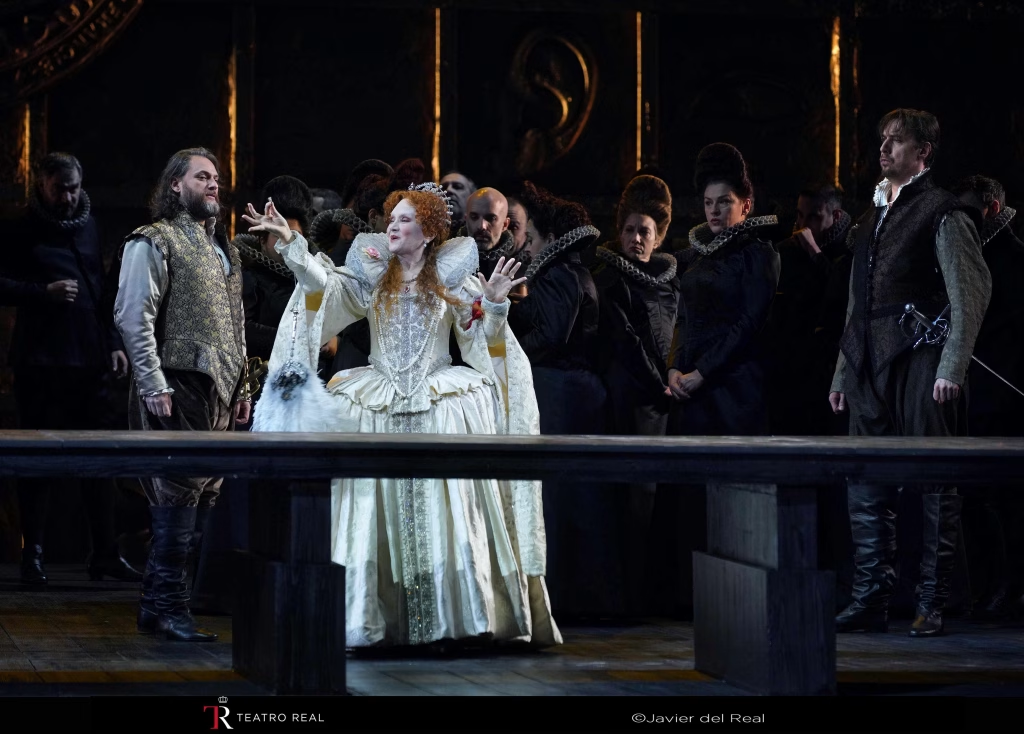
At the Palace of Whitehall in London, the court is celebrating a potential union: The Duke of Anjou, brother to the King of France, has sought Queen Elizabeth’s hand in marriage. Elizabeth is still undecided as to whether she will accept, since for a long time, her heart has belonged to Robert Dudley, Earl of Leicester – although she has sensed that his love for her is waning. Talbot, Earl of Shrewsbury and Mary Stuart’s custodian for many years, takes the opportunity to petition the Queen for her cousin’s release.
Cecil, Elizabeth’s Secretary of State, argues that Mary presents a constant threat to the stability of England. Elizabeth refuses to be drawn in on the subject of her cousin but privately fears that the Queen of Scots has stolen the love of Leicester from her. In the past, Leicester has been a suitor for Mary’s hand.
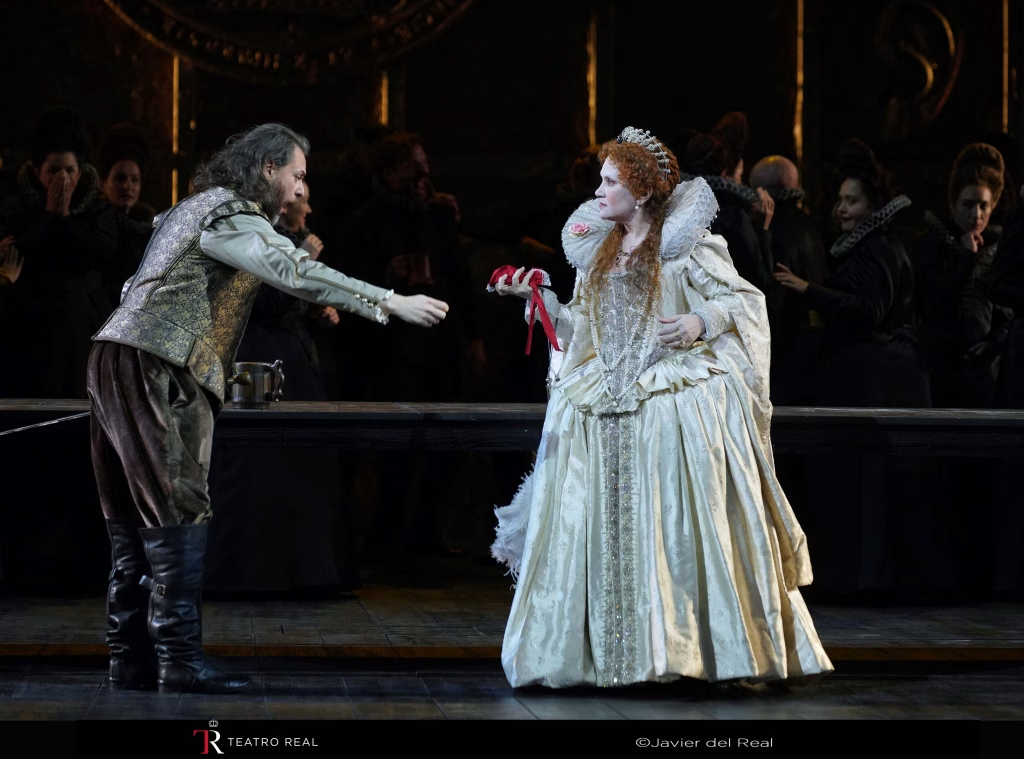
Leicester arrives and Elizabeth gives him a ring to convey to the French Ambassador in equivocal acceptance of Anjou’s proposal. His indifferent response fuels her suspicions, and she leaves, attended by the court.
Alone with Leicester, Talbot secretly hands him a letter and a miniature sent by Mary. Enraptured by the portrait, Leicester vows to give his support to Talbot’s plans for Mary’s liberation.
As Talbot leaves, Elizabeth returns. She demands to see the letter in Leicester’s hands. Mary has written to beg Elizabeth for an audience and despite herself, tears spring to Elizabeth’s eyes. Seizing his advantage, Leicester presses the Queen to agree to ride out near Mary’s prison on a hunt and under this pretext engineer a meeting between the two queens. Although mistrustful, Elizabeth agrees to her favorite’s request.
Unexpectedly allowed by Talbot to walk freely in the park outside her prison of Fotheringhay Castle, Mary rejoices. The horns of the royal hunt are suddenly heard in the distance. The approaching huntsmen cry out Elizabeth’s name, and Mary is struck with fear at the prospect of finally setting eyes on her cousin.
Leicester has ridden ahead to prepare Mary for the meeting. Pledging his love and loyalty, he promises Mary that she may yet be free.
Elizabeth arrives with the hunting party, agitated and suspicious. Talbot leads Mary forward and the two queens stare into each other’s eyes for the first time. Mary masters her pride and shows deference before Elizabeth but her cousin remains aloof and insulting. She accuses Mary of licentiousness, murder, and treason. Insulted beyond endurance, Mary turns on Elizabeth. She denounces her. Elizabeth orders the guards to seize Mary and drag her back to her prison.
Act II
Time has passed and Mary has remained incarcerated at Fotheringhay. The marriage to Anjou is now a faded dream for Elizabeth. Cecil has procured evidence that implicates Mary in a Catholic plot to assassinate Elizabeth, and a warrant for her death lies on the Queen’s desk.
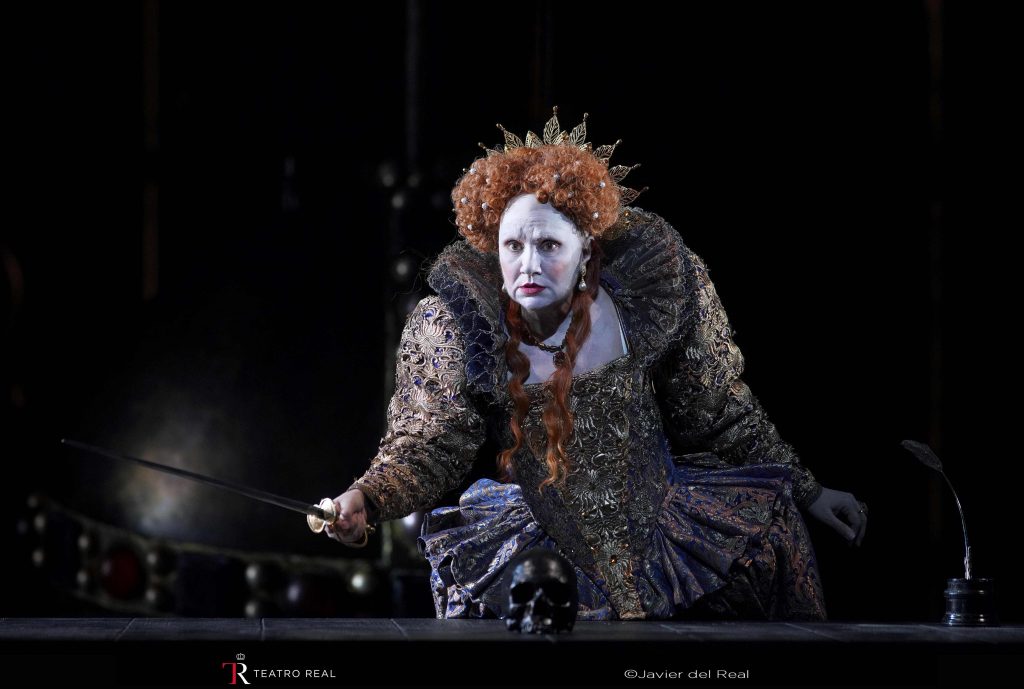
Elizabeth is racked with anxiety and fear. If she signs it, she sends an anointed monarch to the scaffold and makes an enemy of all Catholic Europe. Elizabeth’s indecision ends when Leicester enters the chamber. She signs the warrant and hands it to Cecil. Leicester pleads with her to show mercy. Elizabeth commands him to be present as witness to the execution. Leicester tells her that she has sent a sister to her death and leaves.
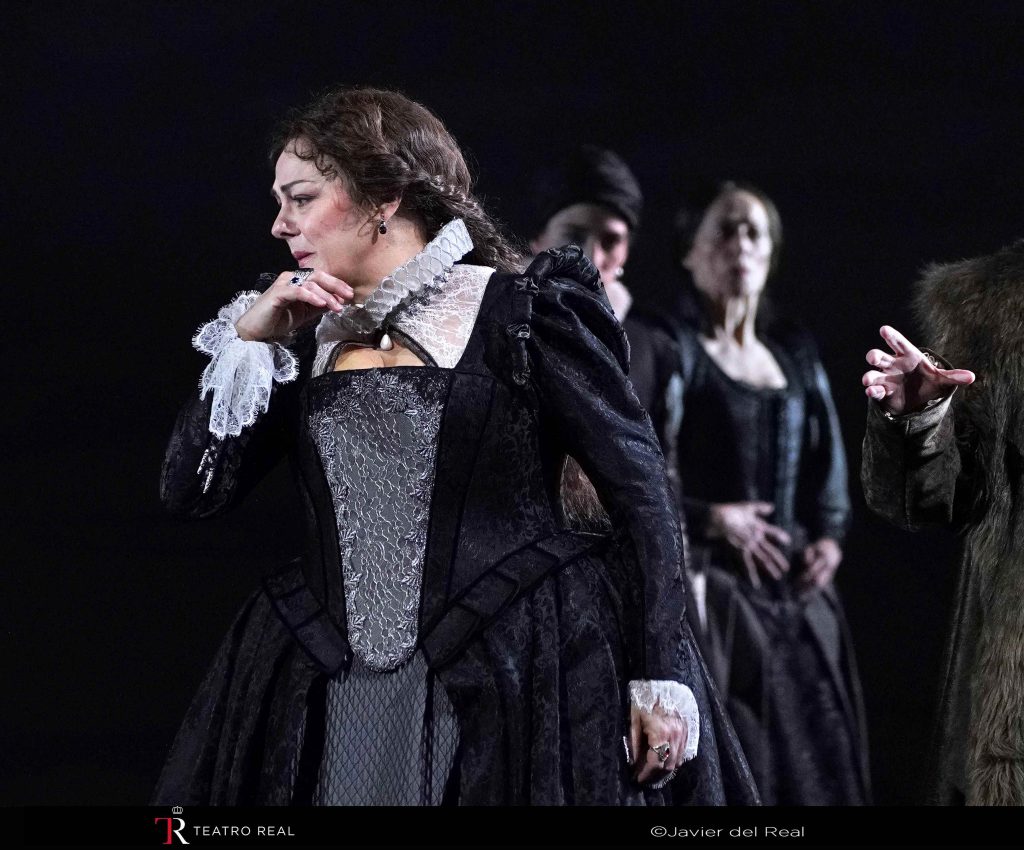
In her room at Fotheringhay, Mary rails bitterly against her fortune. Cecil and Talbot enter to tell her that she must die in the morning. Angrily, she refuses and commands Cecil to leave but asks Talbot to stay. He tells her that Leicester will be present when she dies and tries to comfort her.
Mary longs to make a confession. Talbot urges her to confess to him. Finally, she confesses her unwitting acquiescence in the fatal plot of the English Catholic, Sir Anthony Babington, to assassinate Elizabeth. She and Talbot pray together.
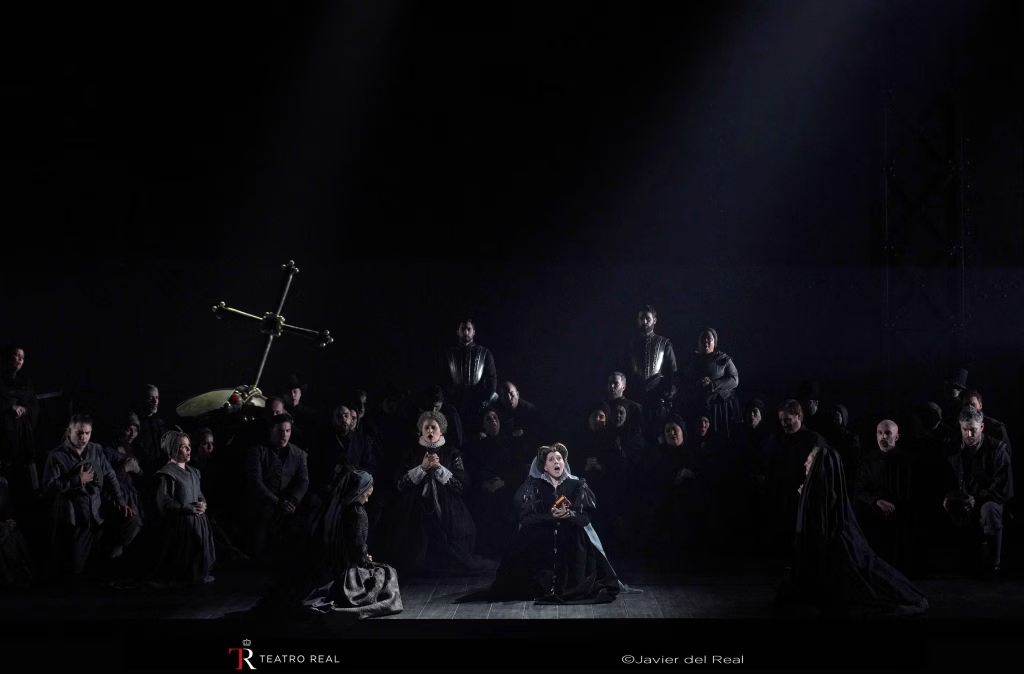
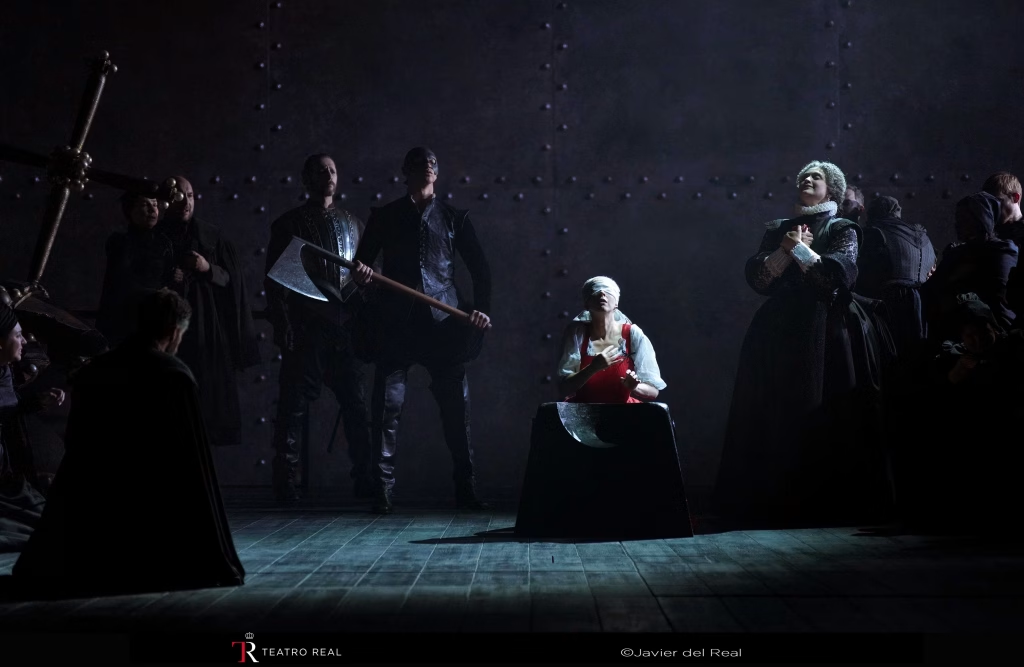
Early next morning, Mary’s faithful servants gather, weeping inside the great hall of Fotheringhay, where Mary will be beheaded. The Queen enters. She asks them not to shed tears, as death comes to liberate her.
The shot of a cannon on the ramparts above signals that the time of execution is near, and Cecil arrives with guards.
Elizabeth has sent word that all requests should be granted to Mary in her final moments, and Mary asks that Hannah may accompany her to the scaffold. She tells Cecil that she forgives her cousin.
Leicester appears, distraught, as more shots of the cannon indicate the time has come. Mary calms him. She prays that England may be spared the vengeful wrath of God. Dressed in red, the color of Catholic martyrdom, she goes to the block.
Gallery
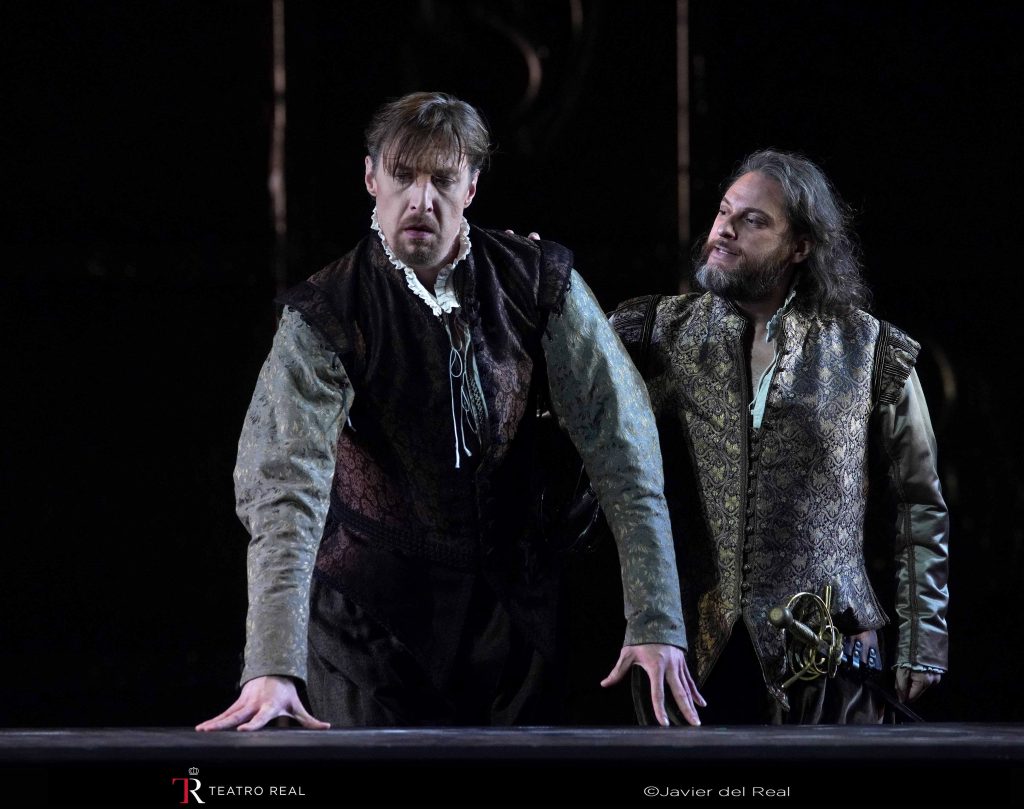
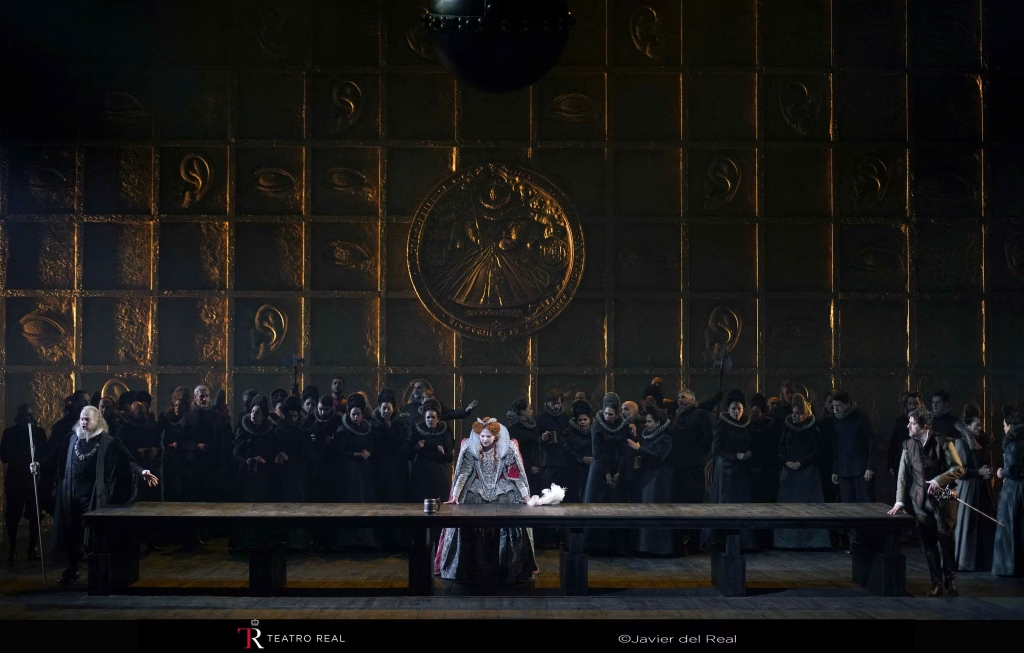
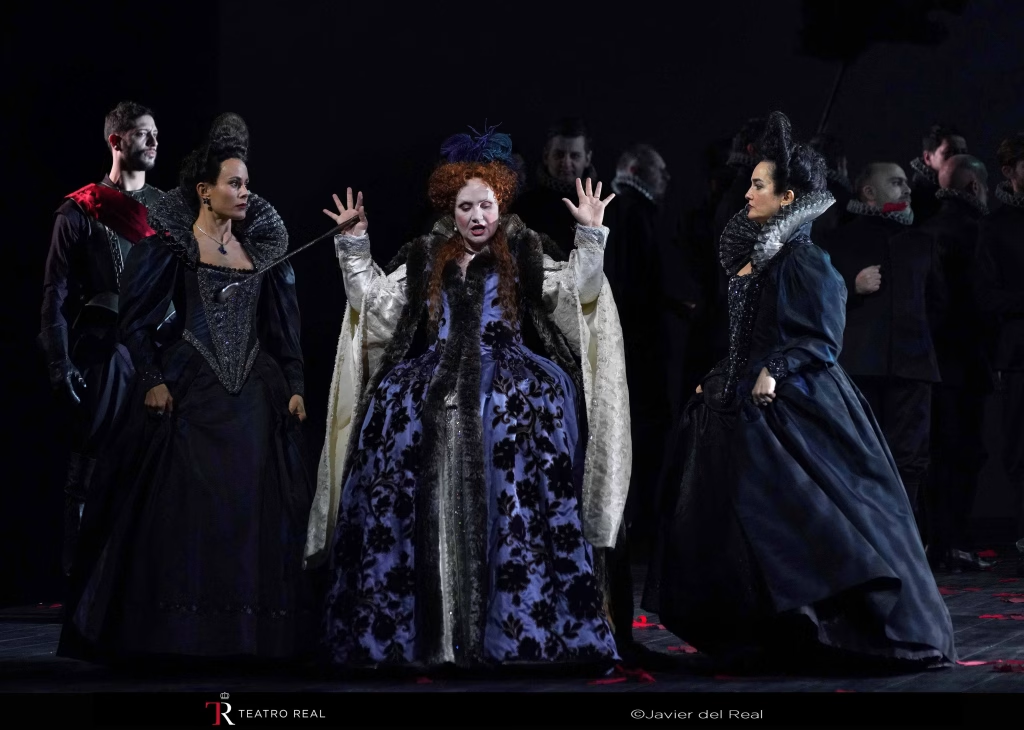
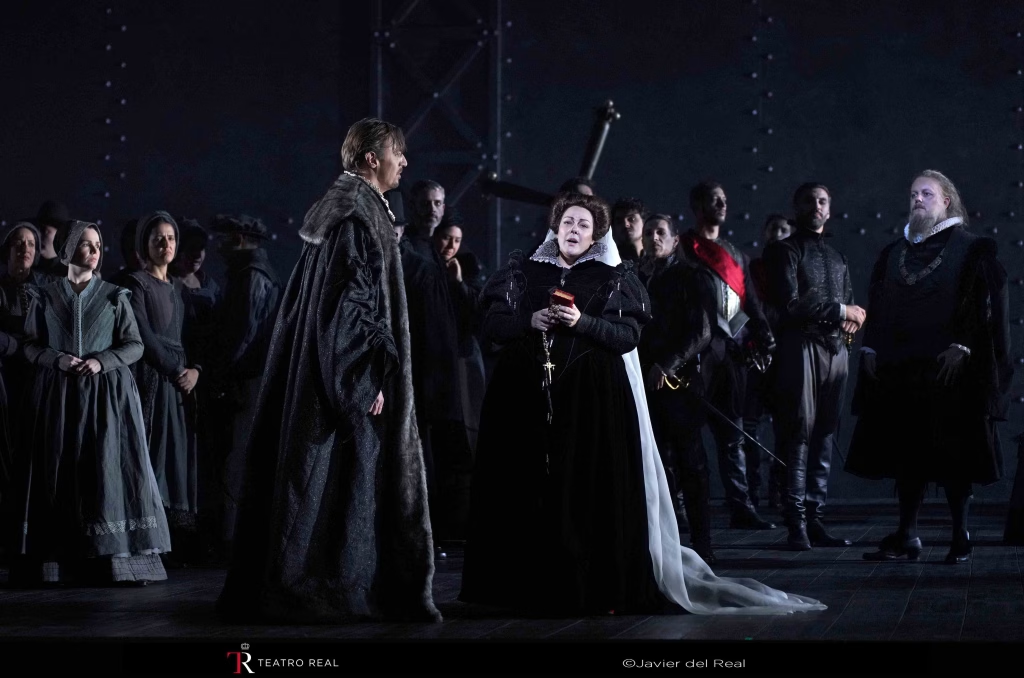
Bel canto
Creative team
- Music
- Gaetano Donizetti
- Libretto
- Giuseppe Bardari
- Director
- David McVicar
- Set Design
- Hannah Postlethwaite
- Costume Design
- Brigitte Reiffenstuel
- Lighting Design
- Lizzie Powell
- Movement Director
- Gareth Mole
- Conductor
- Paolo Arrivabeni
Maria Stuarda is a co-production with the Finnish National Opera, Teatro Real, the Gran Teatre del Liceu, the Donizetti Opera Festival – Bergamo and La Monnaie/De Munt in Brussels.
Cast
- Mary Stuart
- NN











Performance-specific soloists are published in the performance listing.
Listen to Maria Stuarda
You must accept functional cookies to listen to the playlist. To modify your cookie settings, go to cookie settings at the bottom of the page.
The keys to an entertaining evening
The performance takes place on our Main Stage, which has no fewer than 1,300 seats in its auditorium. Please note that the 3rd balcony is very high up. It provides an impressive view, but the front-row seats on this level may not suit those with a fear of heights. Explore the Main Stage and find out more about where to sit. You can also compare the view from different parts of the auditorium.
Price categories: Seats in the auditorium are priced according to the view of the stage and divided into eight price categories (A–H). In addition to seat location, the price is affected by the performance date and demand. Only standard-priced tickets are available in the lowest price categories (F–H).
Discounts
Discounts are available for selected productions, performances, and seats in the Stalls and the 1st and 2nd Balconies, unless otherwise indicated.
- Pensioners: €10 discount per ticket for selected seats in the Stalls and the 1st Balcony. The discount is available to all holders of the card for national pension recipients and anyone aged 65 or over.
- Students, military and non-military servicemen: 40% discount on the full ticket price.
- Children and those aged 20 and under: 40–50% discount on the full ticket price.
- Same-day tickets: A special rate of €30 per ticket is available for those aged 20 and under, students, military and non-military servicemen, the unemployed, and pensioners. The discount applies to seats in the Stalls, no earlier than 12 hours before the performance and subject to availability.
Please note that full-price and concessionary tickets for under-20s, students, and pensioners can be exchanged in our online store free of charge up to 24 hours before the performance. The value of the ticket(s) is credited to your customer account for later use.
Children and young people up to the age of 20 are eligible for a 40–50% discount on ticket prices.
Please note that children under the age of 5 are not admitted to Main Stage performances. The age recommendation for each production can be found at the top of its dedicated page.
For the best view, we recommend seats in the front Stalls or the centre of the 1st Balcony. If you’re unsure which seats would be most suitable, our customer service team will be happy to help you find the best options.
To ensure an enjoyable and memorable visit, see our Visiting with children page for more tips.
You can easily purchase accessible seats either through our online store or customer service. On the auditorium map, you can check the locations of accessible seats in the Main Stage auditorium (pdf). The accessible seats are marked with wheelchair icons to make choosing your seat easier.
Read more detailed instructions for purchasing accessible seats and ensure your visit is effortlessly enjoyable from start to finish.
The programme booklet provides background information about the production, its creators, and the story. It is published on the day of the premiere and can be purchased before the performance from the customer service desk in the Töölönlahti lobby, the sales desk at the Mannerheimintie entrance, all open counters of the Opera Restaurant, and selected members of our lobby staff. The price of the programme booklet is €7.
You can also buy the programme booklet in advance from our customer service desk or online via the Order refreshments page. See more detailed instructions here on how to purchase the programme booklet on the Order refreshments page.
The digital cast details for each opera and ballet, including the evening’s cast and creative team, are published online no later than on the day of the performance (please note that the link opens in a separate window). Cast details are also available on the displays and touch screens in the foyers, as well as under the My events tab in the mobile app.
Enhance your experience with refreshments. You can enjoy refreshments before the performance or during the interval. We recommend placing your order in advance, either through our online store or by calling our customer service. If tables are still available, online sales close no later than 24 hours before the performance.
Using the Opera&Ballet mobile app, you can order interval refreshments to a pick-up counter until shortly before the performance begins. Learn more about pick-up orders.
The Opera House is located by Töölönlahti bay. Our address is Helsinginkatu 58, which is well served by public transport.
The main entrance on the Mannerheimintie side usually opens 1.5 hours before the start of a Main Stage performance. Please make sure you arrive in good time, at least 15 minutes before the performance begins. Latecomers are only admitted after the interval so as not to disturb the performance.
How to dress for the performance? Can I wear perfume? Do I need to pay for the cloakroom? Find answers to these questions and more on our Tips for visitors page. We have put together a comprehensive guide to help make your visit to the Opera House a success.