The perfect revenge?
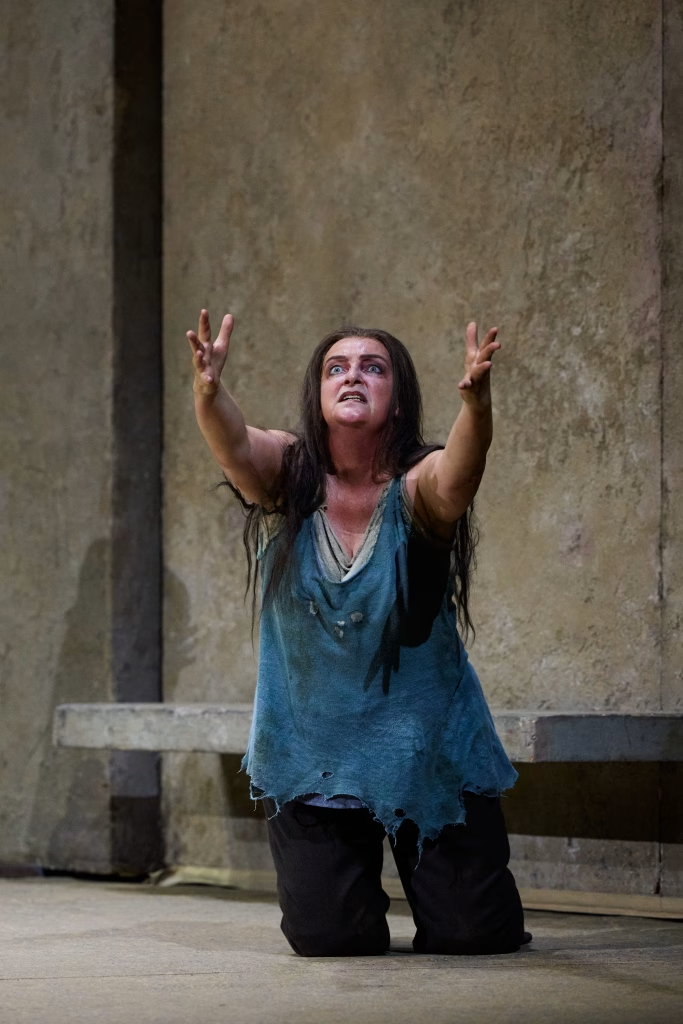
Complex women are some of the most magnetic characters in ancient mythology. Somewhat less familiar, yet even more striking, is Elektra, the scorned princess who broods on vengeance against her father’s murderers. In the golden age of Greek tragedy in the 5th century BCE, she was brought to life by Aeschylus, Sophocles, and Euripides alike. Austrian writer Hugo von Hofmannsthal reimagined Elektra for the stage in 1903. It was Richard Strauss’ opera, however, that brought her back to wider public attention.
Hugo von Hofmannsthal (1874–1929), who struggled with balancing a respectable government career and his artistry, had already gained fame in his teenage years with poetry and short symbolist plays. Their intense style and shocking imagery gave him an aura of decadence.
Written between 1901 and 1903, Elektra was at first little more than an experiment for Hofmannsthal, a test of howSophocles’ ancient tragedy of the same name (c. 420 BCE) might work in his own style. To his surprise, Elektra became a sensation and a landmark of modern theatre.
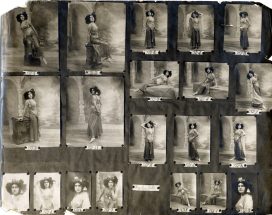
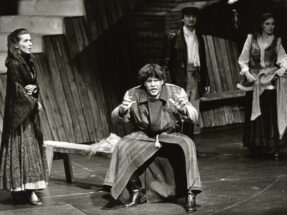
Elektra was staged by a Berlin theatre whose leading actress, Gertrud Eysoldt (1870–1955), had already made a strong impression on Hofmannsthal. Eysoldt was one of the shining stars of contemporary theatre, and her talent had also captivated the composer Richard Strauss (1864–1949). It was her interpretation of the title role in Oscar Wilde’s Salome, shortly before the premiere of Elektra, that inspired Strauss to compose his first opera. When he saw her in Hofmannsthal’s play, he knew he had found the subject for a new opera.
The perfect partnership
After the performances of Salome (1905) and the surrounding scandal had run their course, Strauss and Hofmannsthal began negotiating a collaboration on Elektra. Both were enthusiastic. Strauss, who had resolved to devote himself to opera, felt he had found his dream librettist. For Hofmannsthal, working with a composer of such renown was nothing short of a windfall, all the more so as he was especially drawn to music theatre. He now had the chance to realise his vision of a true union between text and music. One of the most significant composer–librettist partnerships of all time had been born.
Hofmannsthal and Strauss were connected by their complex relationships with both family and modernity. Though their personalities could hardly have been more different — one a sensitive, poetic soul, the other a flamboyant showman — they drew strength from these contrasts and forged a symbiotic collaboration.
Though Hofmannsthal is regarded as one of the most notable German-language writers of the 20th century, he is remembered above all for his librettos for Strauss. The duo created six works together before Hofmannsthal’s death from a heart attack, shortly after the suicide of his son. In addition to Elektra, which premiered in Dresden in early 1909, he turned to ancient drama again in Ariadne auf Naxos (1912) and Die ägyptische Helena (1928). Their most popular collaboration was Der Rosenkavalier (1911), a subtle reimagining of Mozart’s The Marriage of Figaro.
Musical language that defies definition
Elektra is often regarded as the most modern extreme of Strauss’s output, even an anomaly, after which he turned to a lighter and more nostalgic expression. Yet rather than an exception, it is better understood as part of a continuum. Monumental and even angular in its density and dark colours, Elektra undoubtedly sounds modern, but it is still built on the late-Romantic musical language Strauss had developed earlier. The lush melodic passages of respite anticipate Der Rosenkavalier, while in the dark adult fairy tale Die Frau ohne Schatten (1919) Hofmannsthal and Strauss returned yet again to the atmosphere of Elektra.
The pioneers of modernism mocked Strauss as a relic, while the conservative camp recoiled in horror at his hyperactive expression, which at times verged on banality. Strauss was a provocateur who did not shy away from self-deprecation. Elektra represents his more serious side. This may partly explain why the earnest critics of the mid-20th century were so eager to hail it as a classic.
Twisted symmetry
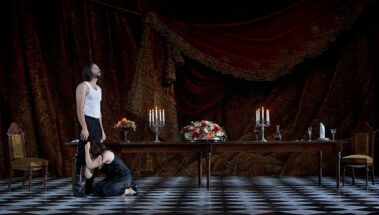
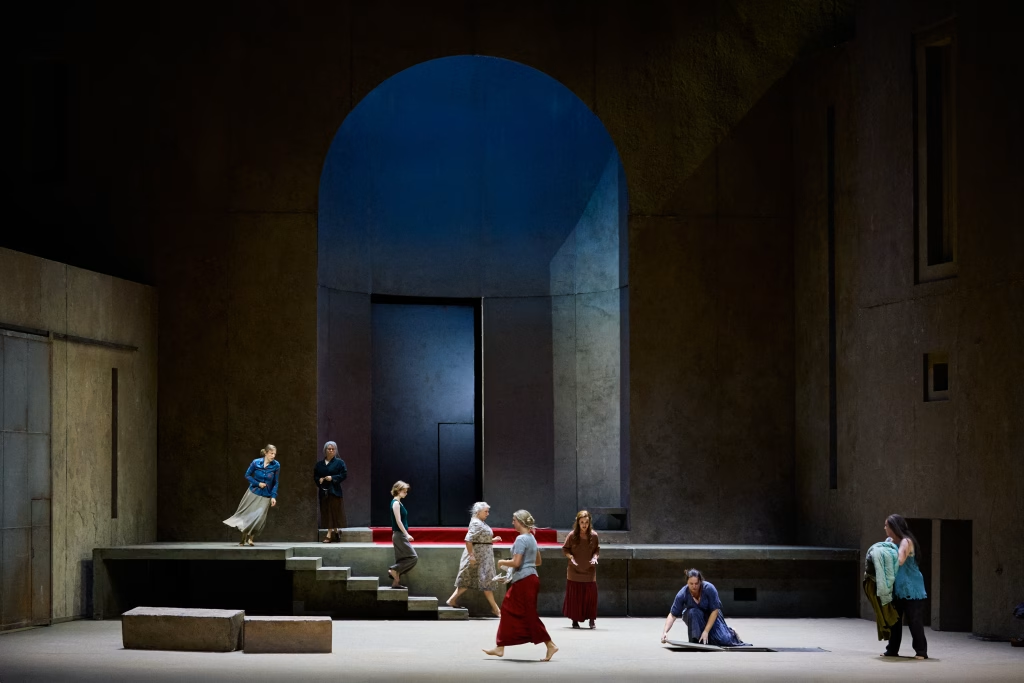
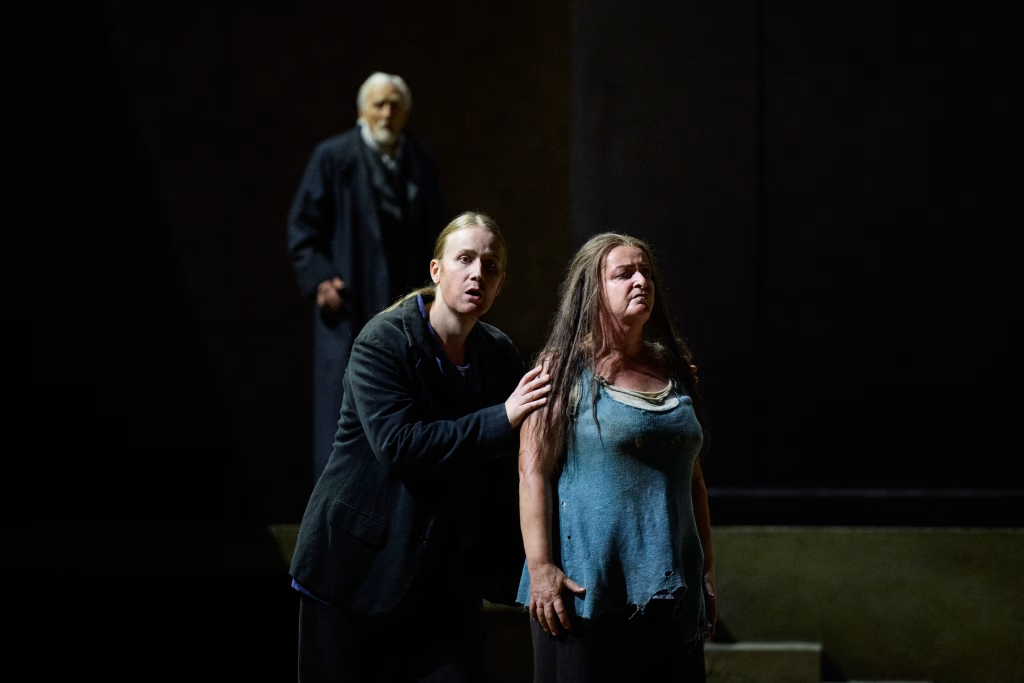
Salome and Elektra are one-act operas closely rooted in the symphonic poems Strauss composed in the late 19th century. They have even been interpreted as symphonies of a kind. Whereas Salome unfolds as a bubbling, erotic stream of consciousness, Elektra’s structure is more rigid, almost geometric. At the centre lies the harrowing conversation between Elektra and her mother, around which the remaining scenes are arranged with near symmetry. The opening scene with the servants functions as a prologue, while the chilling victory celebration at the end serves as an open-ended finale.
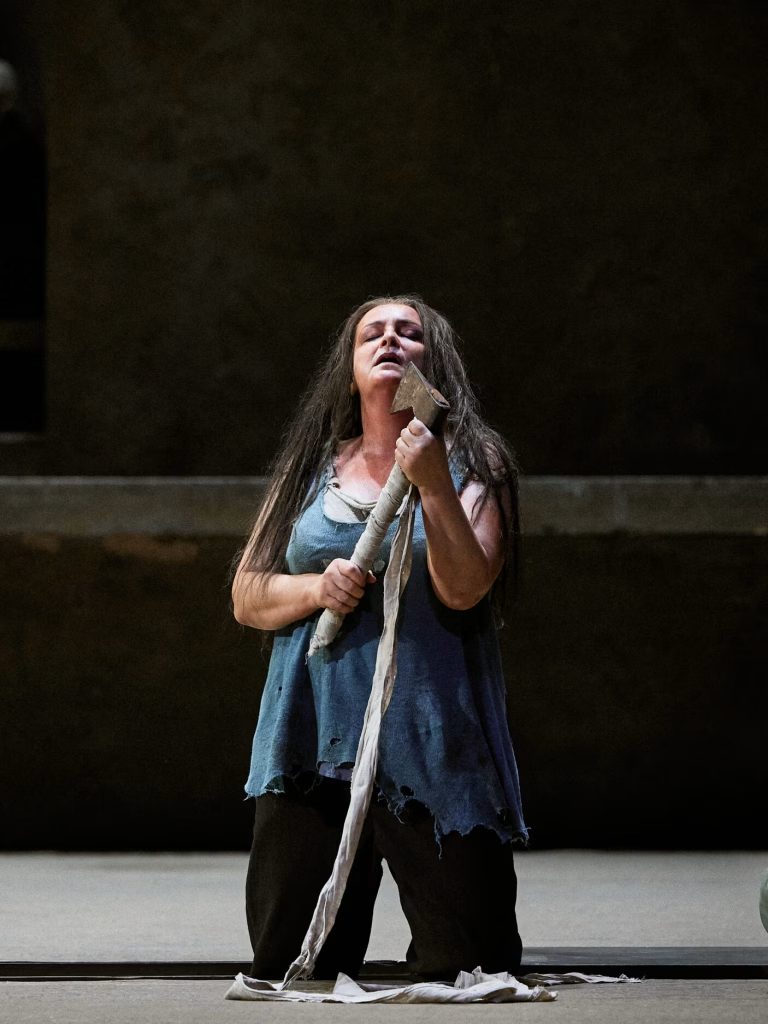
The acts of violence at the heart of the story also forms a kind of symmetry: the present moment is a prison in which Elektra mourns her father’s death and dreams of a murder to set it right. Central to this is the idea of revenge carried out with the very axe that killed King Agamemnon. Yet in their frenzy, Elektra and Orest ultimately forget about the weapon. This imperfection lends the tale the human immediacy of a contemporary murder thriller.
Strauss found Hofmannsthal’s play fascinating in several respects, beginning with the harsh lyricism of its opening. The music of the opera is marked by exaggeration and sharp contrasts. Its jolting, at times disjointed character gradually builds tension toward the climax. The work is driven by extremes of hatred and love, its musical form shaped by bloodlust and gratification. Strauss creates an impression of relentlessly mounting pressure, which finally erupts in the ecstatic victory dance. But is it truly a victory?
Text Auli Särkiö-Pitkänen, translation Anna Kurkijärvi-Willans
Photos Ilkka Saastamoinen
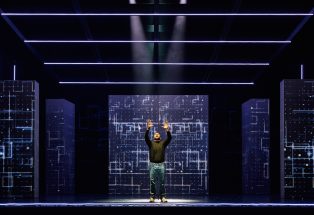
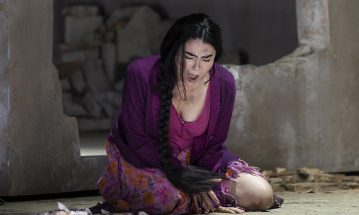
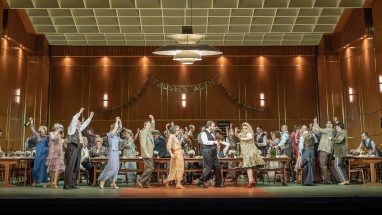
Elektra in the Finnish National Opera 17 September – 4 October 2025